CategoriesNextgen

Arbeena Hassan

Arbeena Hassan

Student, Global Academy of Technology, Karnataka

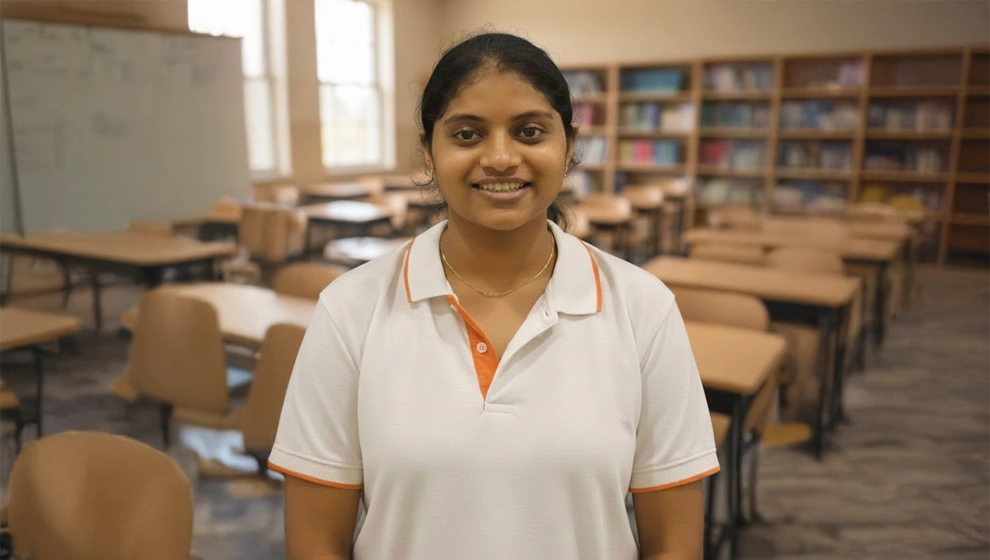
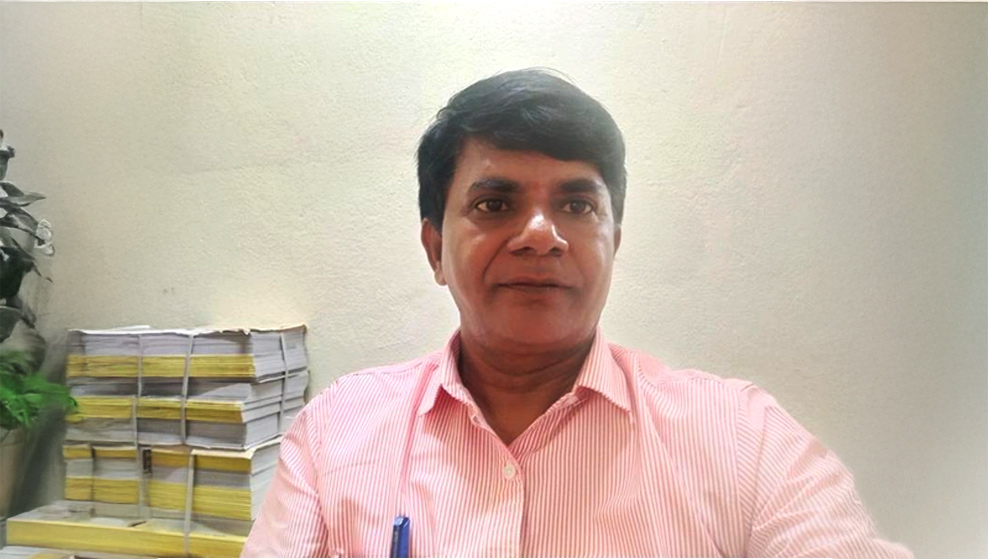
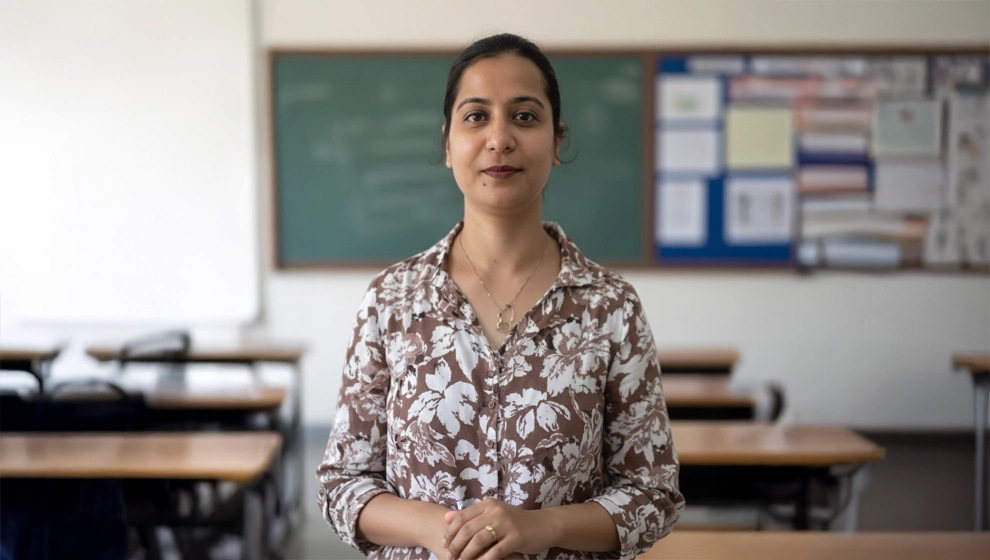
“Landing my role as a Software Engineer at IBM feels like a dream come true—Next Gen EmployabilityProgram helped me make it happen,” shared Arbeena Hassan, a 22 year old, who always wanted to be anengineer but had little hands-on backend practice. Coming from a strong academic background, shejoined the six-week MERN-stack program to gain the practical skills that academic courses alone couldn’tprovide.

During the program, Arbeena built RESTful APIs with Node.js and Express, structured data in MongoDB,and worked on server-performance optimizations. Each day she completed hands-on labs, used mentorfeedback to fix bugs, and practiced until she could reliably deploy a working backend service. Thesefocused exercises turned theoretical concepts into usable code and gave her the confidence to tacklereal-world problems.

By the end of the program, Arbeena had built multiple backend modules and honed her debuggingprocess—experience that directly led to her securing the Software Engineer position at IBM. “Writingcode every day and testing my solutions under real conditions was the key,” she reflects. The IndustryExpert master sessions guided her to understand the latest trends and shared insights on how they usethese skills we are learning on a daily basis.

“I built in confidence to sit for an interview without feeling nervous through the placement skill sessions”She added. Arbeena finally said, “If you want to go from theory to a professional role, this program showsyou exactly how.”myself,

CategoriesEducate to Employ

Vinit Patel

Vinit Patel

G H Patel College of Engineering and Technology, Gujarat

Your first ‘Hello World’ is a start, but the real innovation begins when you find the language that speaks to your potential. 

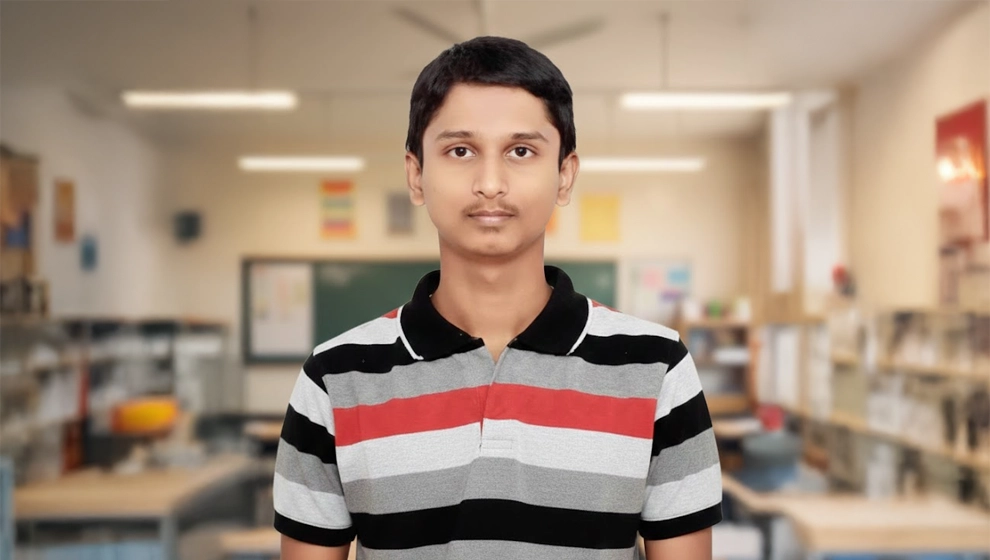
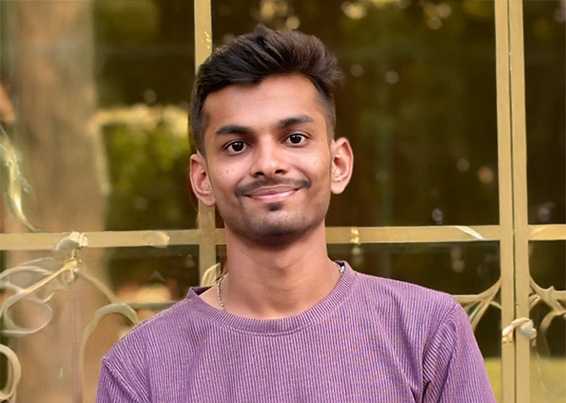
Vinit Patel, a Computer Science and Design graduate from GH Patel College in Anand, found his path through the SAP Educate to Employ program. He developed his technical skills and specialized in SAP ABAP, a powerful backend language used in global enterprises. In just eight months, he went from basic digital knowledge to mastering software development lifecycle practices, Git workflows, and deep ABAP cloud development. His capstone project, “Block Train”, showcased enterprise-level skills with CDS views and SAP Fiori integration. This journey culminated in his SAP ABAP Cloud Associate certification.  

The program not only boosted his technical abilities but also prepared him for job opportunities. Through employability workshops, Vinit overcame hesitation with English, structured his resume, and learned to present his experience confidently in interviews. These skills helped him secure a Tech Ops Engineer internship at Datahash. Looking back, Vinit credits the program for not only teaching him ABAP but also empowering him to effectively communicate his skills and secure a promising career. 

CategoriesEducate to Employ

Bhavi Patel

Bhavi Patel

Charotar University of Science and Technology(CHARUSAT), Gujarat​

In the era of AI, success is not just about having all the answers, but about asking the right questions, designing logical solutions, and utilizing tools effectively to achieve intelligent efficiency. 

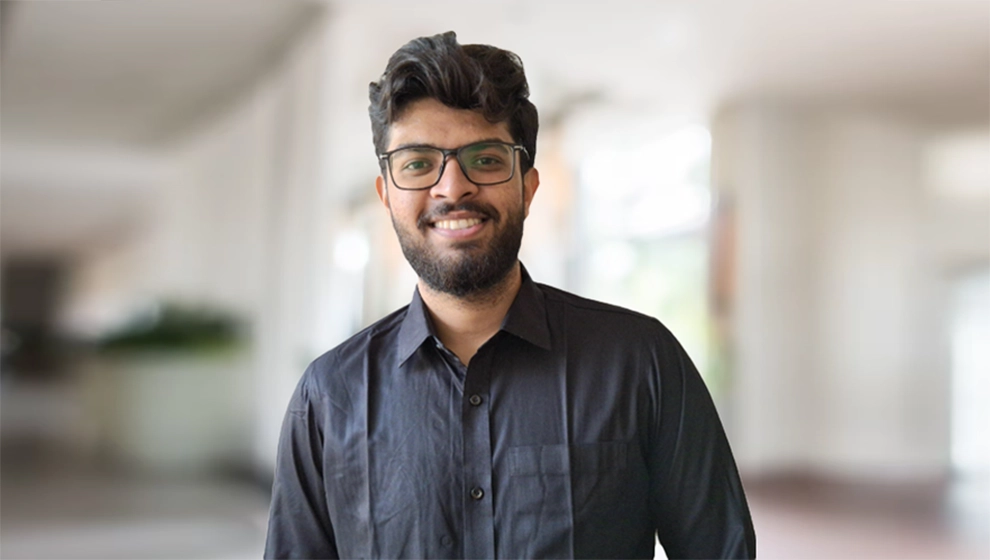
This principle guided Bhavi Patel, an MCA student at CHARUSAT University, through the SAP Educate to Employ initiative. Through this program, she not only strengthened her technical skills in Software Engineering, Agile, and SAP ABAP, but also enhanced her professional profile by optimizing her LinkedIn profile, refining her resume, and mastering time management strategies. These employability skills not only boosted her confidence but also helped her secure her first job in the industry, demonstrating that career readiness requires a combination of mindset and technical expertise. 

Today, Bhavi serves as an AI Intern at Mastercom, contributing to the advancement of enterprise automation. The program not only equipped her with technical tools but also taught her critical thinking, effective communication of her skills, and the ability to translate her knowledge into impactful solutions. With a solid understanding of SAP technologies and a problem-solving approach, Bhavi is actively shaping a future where AI plays a significant role in driving positive change.  

CategoriesBlog

Introducing Tech Trades in the Vocational Ecosystem

Impact isn’t just about numbers—it’s about foundational change.

For many vocational institutes in India, advanced digital trades are still a future goal. That’s why this partnership with Microsoft and DGT feels so significant. We’re introducing the AIPA program—a one-of-its-kind AI and ML trade for ITIs and NSTIs where such courses are rarely available. As of December 2025, data from MSDE releases and DGT prospectuses reveal patchy but expanding coverage. This survey synthesizes official sources, enrollment trends, and institutional breakdowns, estimating percentages against totals of 33 NSTIs and 14,682 ITIs. It underscores a reliance on introductory formats amid demands for deeper skilling to address NASSCOM’s projected 1 million AI jobs gap.

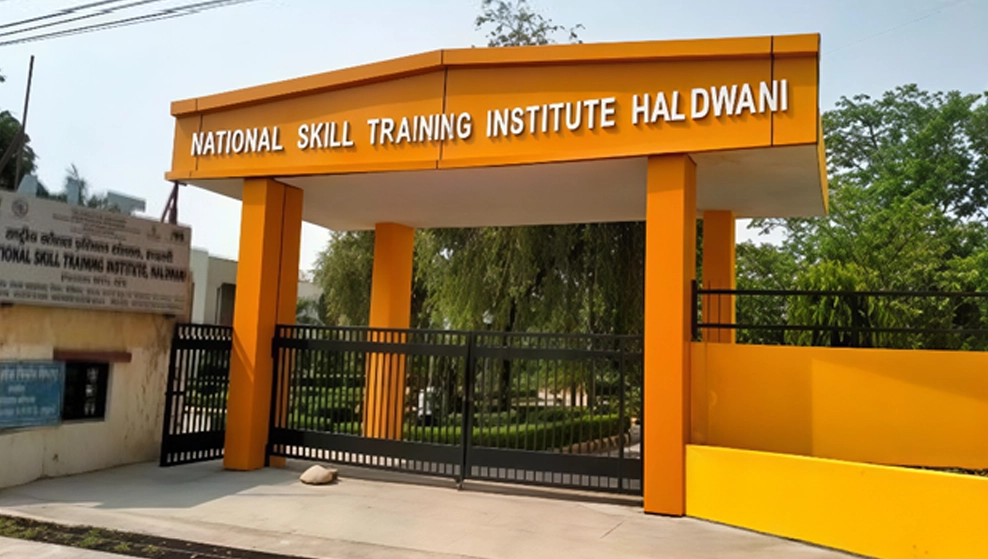
India’s vocational ecosystem continues to evolve AI and ML integration in Industrial Training Institutes (ITIs) and National Skill Training Institutes (NSTIs) under the Directorate General of Training (DGT), Ministry of Skill Development and Entrepreneurship (MSDE), with AIPA being the primary one-year NSQF Level 3.5 trade for AI programming. Last year, we ran this program across 19 NSTIs. The response made the need undeniable, so this year, we’ve expanded to 22 NSTIs, like the one in Haldwani and look forward to extending our reach even further!

Hear from Bhagat Singh, Head of Office at NSTI Haldwani:

“Before AIPA, we had no computer-related trade. Now, our trainers and students are learning Python and building toward AI.”

This isn’t just an added course; it’s often the first step into IT for these centers. Proud to collaborate with Microsoft and the Directorate General of Training (DGT) to bring frontier skills to vocational education.

CategoriesBlog

Live and Learn

At the EduNet Foundation, our vision is to holistically strengthen India’s skilling and education ecosystem. We believe this begins not just with the student, but crucially, with the educator. True change is ignited when we empower the architects of learning in our classrooms.

This is the story of one such architect: Professor K. Rajagopal.

With a remarkable 23-year career in engineering education and dual PhDs in Computer Science and Electrical Engineering, Prof. Rajagopal is the bedrock of his institution. His journey into teaching began in the early days of his career, right after his M.Tech in 1998. He recalls a natural inclination for explaining concepts, a trait spotted early on: “Whenever the teachers tell something, immediately I stand up and I will give the answer… So with that confidence… there is no fear to tell the students whatever I know.” For two decades, his passion has been guiding students toward socially relevant projects. Yet, even with this vast experience, he holds a powerful belief that is central to our mission at EduNet: “Even though faculty having much experience, without knowledge being updated, you will be outdated.” He describes the value of moving from theory to real-world application:”What is the fundamentals and how we are going to implement in the real system by using the different algorithms?… This type of trainings are very important.”

He was particularly captivated by a hands-on IoT session, where he successfully programmed an LED light, a moment that bridged his dual expertise in hardware and software. But the program’s impact extends beyond his own classroom. He sees this as a catalyst for institutional and societal change. He passionately advocates for more such collaborations, emphasizing the need for support in research and projects: “I asked for help in my personal research… to do 2D innovations… I wanted to go in depth.” He speaks not just of learning, but of a significant upgrade to his existing knowledge: “It was a sharpening of tools.”

His message to fellow educators is clear and compelling: “This type of FDPs are essential to the faculty… they have to know first before teaching to the students.” He considers himself to be very lucky for being one of the 6 faculty members from his college, selected to take part in this program. This is the holistic impact we strive for at EduNet Foundation. By building the capacity of educators like Prof. Rajagopal, we create a multiplier effect. An updated, inspired, and empowered faculty doesn’t just teach a syllabus; they ignite curiosity, guide groundbreaking projects, and ultimately, shape the future of the industry. We are proud to partner with SAP in this mission and salute the dedication of educators like Prof. Rajagopal, who remind us that the journey of learning never ends.

CategoriesUncategorized

Kartavya Joshi

Kartavya Joshi, a final-year Computer Science student at New LJ Institute of Engineering and Technology, Ahmedabad, has carved a remarkable path of growth through resilience and opportunity. Raised in a modest family in Surat, Gujarat, with a father working in a textile shop and a mother managing the home, Kartavya’s journey into engineering wasn’t planned—it was sparked by a chance encounter with coding in 11th grade. Struggling through financial hardships, the pandemic, and an early education in a Gujarati-medium school, Kartavya faced immense challenges adapting to an English-based technical curriculum and lacked access to paid resources and learning tools. Yet, his curiosity and perseverance led him to seek out better learning experiences, eventually discovering the Code Unnati Internship Program offered at Gujarat Technological University.

When Kartavya was finally eligible to apply in his fourth year, he jumped at the opportunity—and it changed everything. Unlike his college curriculum, which was mostly theoretical, Code Unnati introduced him to practical, industry-aligned training in areas like AI, IoT, ML, Neural Networks, and SAP. The trainers not only made complex topics understandable but also fostered an inclusive learning space where every student felt valued. Kartavya’s understanding deepened through hands-on sessions and a capstone project, SmartFlow-AI, which used AI to detect road hazards like potholes or stray animals and alert local authorities. This real-world application of his learning boosted both his confidence and technical competence, empowering him to think like an engineer and problem solver.

As a direct outcome of the program, Kartavya secured an internship at Bitsware Technologies, earning a ₹5000 stipend and the potential for full-time employment. His participation in the Code Unnati Innovation Marathon, where he volunteered in event management, further enhanced his communication and leadership skills—helping him step beyond academics and into professional readiness. Today, Kartavya stands at the threshold of a promising career, with a growing interest in cybersecurity. His story is a powerful reminder that with the right opportunity, guidance, and determination, even students from the humblest backgrounds can unlock a future full of possibilities.

CategoriesBlog

Dnyaneshwar’s new direction

Before the Career Readiness Session, Dnyaneshwar Damodhar Kale, a final-year engineering student, was “just looking for a job in any company.” His goal was to start somewhere, but the path to top-tier companies seemed distant.

That changed after a transformative session with our SAP volunteers. The guidance wasn’t just about skills; it was about mindset.

Dnyaneshwar shares: “Before the session, I was just looking for a job… But after that session, I changed my dream. My goal is now 8-10 LPA. So I can do it, and I will achieve even more.”

This shift from seeking a job to targeting dream roles is the core of what we strive for at EduNet Foundation through #CODEUNNATI. It’s not just about readiness; it’s about elevating ambition.

To learn more about how Edunet is shaping the minds of India’s Youth and building the tech ecosystem in the country, follow us!

CategoriesBlog

Never too late to learn

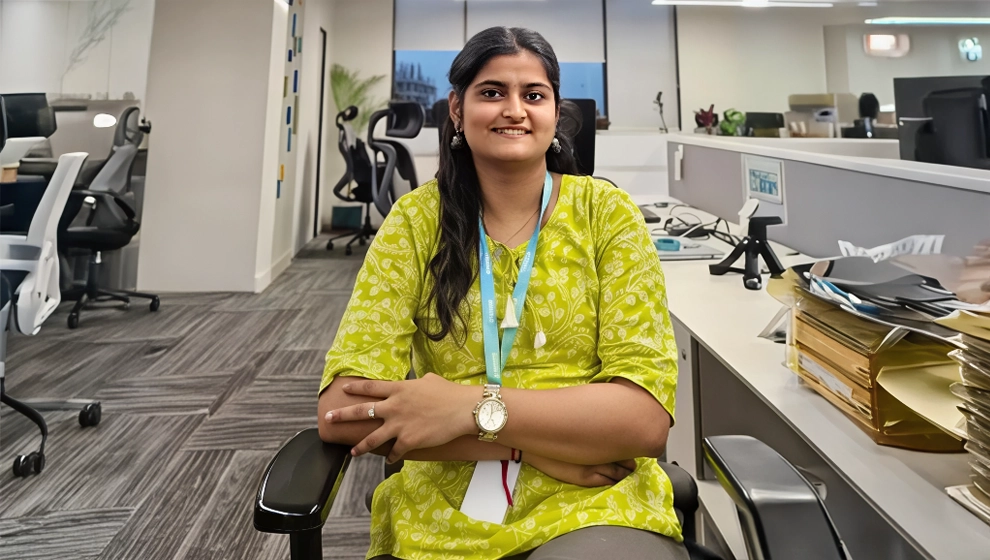
After completing her BE degree, Priyanka Rajput decided to get married and settle down. For many, this could have been the end of a professional dream. Now, at 29, she’s reclaiming that dream.

When she saw the ad for the AIMD program, she took a decisive step: she spoke with her husband about her goal to resume her career. At this crucial moment, her husband and in-laws became her strongest supporters, encouraging her to join the program. She is now learning Python, Excel, and Generative AI, steadily working towards her goal of becoming a Data Analyst—the very career she first envisioned in college.

Her story stands as an inspiration to all women who, for many reasons, have had to put their career aspirations on hold. Her advice is for anyone whose path has taken an unexpected turn: “If life gives you an opportunity, take it and use it to develop your career and grow as a person.”

CategoriesBlog

ACT Showcase Event

We recently celebrated the incredible journey of our first Hyderabad bootcamp students in a special project showcase with our partner, Freshworks, marking a significant step in their academy’s expansion to nurture new tech talent. The cohort was a powerful testament to second chances, including Class 12 students who had previously stepped away from higher education.  

The event vividly displayed their growth, as one participant observed, from being those “hesitant to come to the stage” to confidently anchoring the event, performing in a skit on truth, and moderating group discussions on AI. Our special guests, Samuel David and Rukmani from Freshworks, offered invaluable guidance, with Samuel sharing three essential rules for success: “Learn one thing every day, do not hesitate to make mistakes, and if you do make mistakes, don’t repeat them.”  

The event culminated in the announcement of the top all-round performers, who have earned a visit to the Freshworks headquarters in Hyderabad—a fantastic opportunity to connect with the tech industry. This showcase was a powerful demonstration of how targeted skilling can rebuild confidence and open doors to promising futures. 

Edunet Foundation is an Indian non profit with pan India presence. It enjoys Special Consultative Status with the Economic and Social Council (ECOSOC) of the United Nations since 2020.

Copyright © 2026 Edunet Foundation. All Rights Reserved.